Live Feed
New
Today, July 18, 2026
13:56
A whale address known as geministar.eth, beginning with 0x49C, deposited 19,235 ETH worth $35.34 million to Binance 15 minutes ago, EmberCN reported. The tokens had been withdrawn from Binance a month earlier, when ETH was priced at $1,766. If sold, the position would yield an estimated profit of $1.4 million. According to CoinMarketCap, ETH was trading at $1,840.58, little changed from yesterday.
13:54
South Korean exchange Bithumb announced it will temporarily suspend Tether (USDT) withdrawals on the Tron network starting at 2:00 p.m. UTC on July 18.
13:39
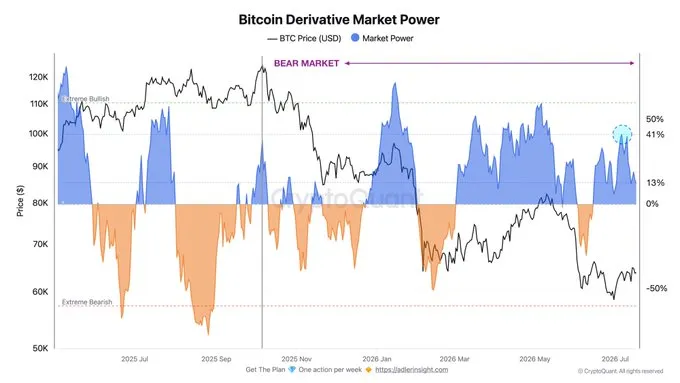
Bitcoin’s recent upside momentum in the derivatives market has weakened sharply, but the market has not yet shifted into a bearish phase, cryptocurrency analyst Axel Adler Jr. said on X.
Adler said the Bitcoin Derivative Market Power indicator fell to 13% from 41%, showing the derivatives market’s ability to drive price gains has dropped significantly. Adler added that BTC also saw a correction in June alongside a similar decline in the indicator, but current buying demand appears firmer than it was at that time. Adler said derivatives fund flows could become a key market variable going forward, and if the indicator turns negative again, selling pressure could retake the lead.
12:44
An address that stole $21.2 million worth of BONK in the BONK DAO governance attack deposited another 400 billion BONK, worth $1.19 million, into Coinbase, EmberCN reported. BONK fell another 7% after the deposit. According to CoinMarketCap, BONK was trading at $0.00000293, down 8.74% from yesterday. Meanwhile, South Korean exchanges Upbit and Bithumb have temporarily suspended BONK deposits and withdrawals since July 7, and BONK prices on the two exchanges have diverged from global prices.
12:33
Iranian Deputy Foreign Minister Gharibabadi said Iran has suspended implementation of its memorandum of understanding (MOU) with the U.S. after the United States violated its commitments, Xinhua reported, citing Iranian media.
12:19
Additional amendments for Morgan Stanley’s spot Ethereum and Solana ETFs were submitted to the U.S. SEC on July 14, Cointelegraph said on its official X account. Morgan Stanley filed applications for the spot ETH and SOL ETFs with the SEC in January. In June, the firm also submitted amendments outlining staking plans for the two ETFs and setting a management fee of 0.14%, which it described as among the lowest in the industry. The ticker for Morgan Stanley’s spot ETH ETF is expected to be MSSE, while the spot SOL ETF is expected to trade under MSOL.
12:05
Crypto asset manager Grayscale has filed an amendment with the U.S. SEC for its Solana staking ETF, GSOL, to liquidate staking rewards into cash at least quarterly and distribute them directly to shareholders, Cryptopolitan reported. Under the proposal, shareholders would receive staking rewards in U.S. dollars after certain expenses are deducted from GSOL’s annual staking yield of about 6.1%. The filing also includes plans to cut the management fee to 0.19% from 0.35% and the staking fee to 7% from 23%.
11:59
Cardano’s Van Rossem upgrade is scheduled to be activated in about 10 hours, at around 1:44 a.m. UTC on July 19, according to U.Today. The upgrade includes improvements to the performance of the Plutus smart contract platform, changes to the cost model, and stronger node security. ADA was trading at $0.1658, up 3.10% over the past 24 hours, according to CoinMarketCap.
11:54
Hyperliquid's share of perpetual futures open interest relative to centralized exchanges has surpassed 9.4%, setting a record high, according to data compiled by Hypeflows. The figure marks the highest level since the platform's launch. HYPE, however, was trading at $58.58, down 2.84% from 24 hours earlier, according to CoinMarketCap.
10:57
Corporate adoption is inevitable and should be welcomed if Bitcoin is to succeed as a global monetary network, Strategy founder Michael Saylor said on X. He added that corporations let people organize around a shared purpose while complying with the law, which in turn improves efficiency, transparency, credibility, scale, resilience and continuity.
08:55
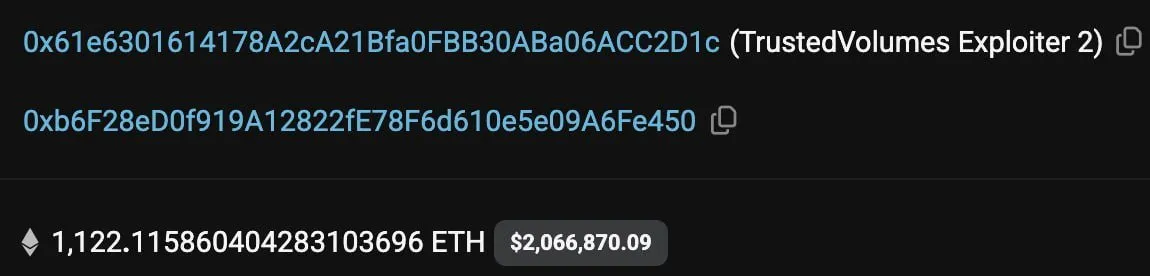
A hacker behind the attack on liquidity provider Trusted Volumes returned 1,122 ETH, worth about $2 million, to the project, Com Feed reported. Trusted Volumes previously lost about $5.87 million in a hacking attack that exploited a vulnerable smart contract.
07:28
The following are the 24-hour long/short ratios for BTC perpetual futures on the world’s three largest crypto futures exchanges by open interest:
Overall: 51.86% long, 48.14% short
- Binance: 54.54% long, 45.46% short
- OKX: 52.42% long, 47.58% short
- Bybit: 53.31% long, 46.69% short
06:37
An address estimated to be linked to a16z deposited 421,796 HYPE, worth about $25.3 million, to exchanges including OKX and Bybit, according to Lookonchain. Exchange deposits are typically interpreted as being intended for selling.
Another address also estimated to be tied to a16z deposited 471,500 HYPE to multiple exchanges yesterday. HYPE was trading at $58.79, down 0.77%, according to CoinMarketCap.
06:08
Strategy’s short-term liquidity issues have been eased in large part through its Digital Credit Capital Framework, but the company still lacks clear principles for buying and selling Bitcoin, The Block reported, citing CryptoQuant.
According to the report, Strategy raised its reserves to $3 billion after unveiling the framework through the sale of about 3,588 BTC and stock, extending its dividend payment capacity from 14 months to 29 months. The analysis added, "Strategy" still lacks a systematic decision-making standard on when to resume Bitcoin purchases and has not established principles for strategically selling some BTC in the next bull market or realizing gains through hedging to reduce leverage.
05:32
A wallet believed to be linked to the Ondo team transferred 26.05 million ONDO, worth about $9.79 million, to Coinbase around 12 hours ago, on-chain analyst @ai_9684xtpa said. The address had received 150 million ONDO from an Ondo Finance multisig wallet three weeks earlier.
05:23
Nasdaq-listed mining company Bitdeer (BTDR) said in a weekly report it mined 244.3 BTC last week and sold all of it. As a result, the company’s own BTC holdings, excluding customer-deposited assets, were also tallied at zero. Bitdeer has continued a zero-BTC-holdings strategy, selling all Bitcoin it has mined since February.
05:21
U.S. spot Ethereum ETFs posted $36.75 million in net inflows on July 17, according to Trader T. The funds returned to net inflows after one day of net outflows.
- BlackRock ETHA: +$31.68 million
- Fidelity FETH: +$5.05 million
- BlackRock Staking ETHB: +$0.03 million
05:17
U.S. spot Bitcoin ETFs recorded $132.3 million in net inflows on July 17, according to data compiled by Farside Investors. The inflows extended the streak to four straight trading sessions.
- BlackRock IBIT: +$136.5 million
- Fidelity FBTC: -$4.2 million
03:01
The following shows estimated liquidation volumes and position ratios for major crypto perpetual futures over the past 24 hours:
- BTC: $74.7 million liquidated (60.33% longs)
- ETH: $76.83 million liquidated (60.98% longs)
- AKE: $9.01 million liquidated (87.81% shorts)
02:43
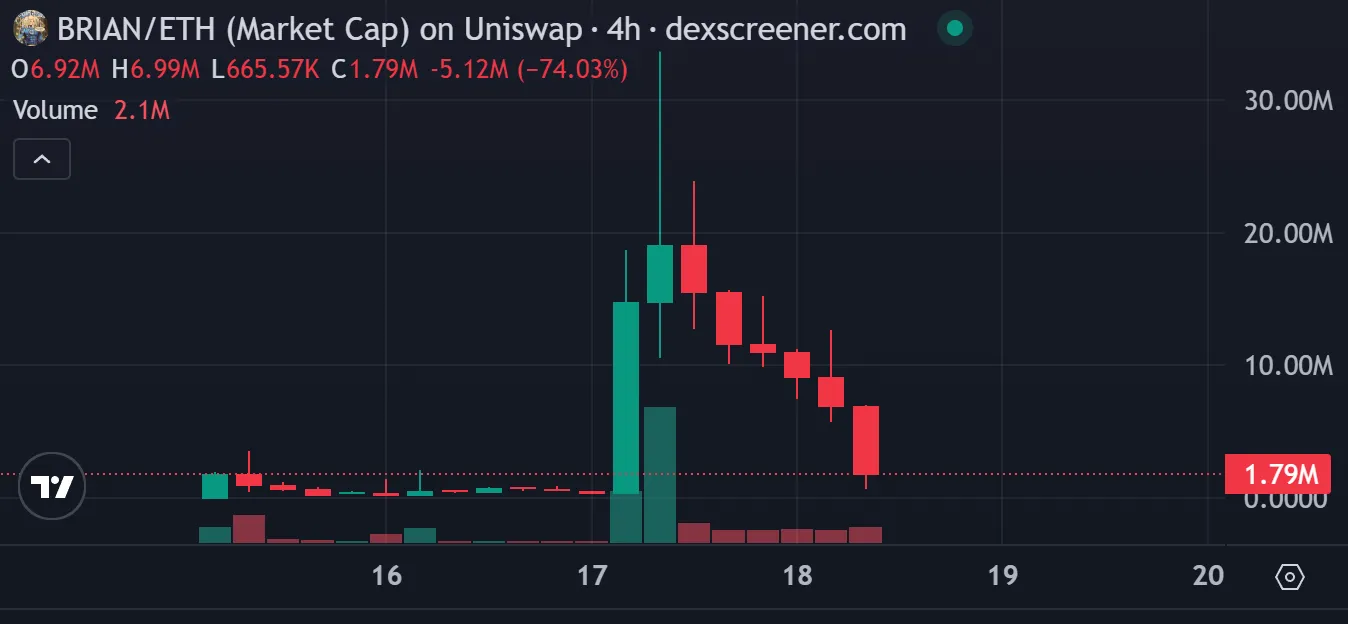
BRAIN, a Base-based meme coin also known as Coinbase Man, saw its market capitalization fall from a peak above $35 million yesterday to about $1.8 million, according to GMGN data. The token was down more than 93% over the past 24 hours, while trading volume during the same period was about $14 million.
BRAIN is a meme coin based on the B20 token standard introduced through Base chain's Beryl upgrade, and its name is derived from Coinbase CEO Brian Armstrong. Community interest surged and the price jumped after Armstrong changed his X profile picture to one resembling the BRAIN logo, but selling pressure expanded sharply after he later changed the profile picture again.
01:41
U.S. Central Command said U.S. forces ended a seven-day airstrike campaign on Iran at 9:30 p.m. on July 17. The operation struck reconnaissance outposts, military logistics infrastructure, underground weapons storage sites, and maritime targets, with fighter jets, drones, and warships deployed.
The command said it is continuing to hold Iran accountable under orders from the commander in chief while fully enforcing a maritime blockade of Iranian ports. It added that more than 50,000 U.S. troops are currently operating in the Middle East and remain on alert for an immediate response.
01:19
U.S. federal prosecutors have charged 21-year-old Florida resident Zyaire Wilkins with allegedly stealing cryptocurrency by embedding malware in Steam games. Prosecutors said Wilkins inserted malware into at least eight games from May 2024 to February 2026, infecting about 8,000 devices and stealing more than $220,000 from about 80 cryptocurrency wallets.
The games named in the case were BlockBlasters, Chemia, Dashverse, DashFPS, Lampy, Lunara, PirateFi and Tokenova. Some of the games had already been removed from Steam over security concerns.
Investigators said Wilkins promoted the games through Discord, Telegram, X and LinkedIn to encourage downloads, then used the malware to steal personal information and assets from crypto wallets. The FBI said it identified the suspect by analyzing on-chain fund flows and digital payment records. In particular, investigators traced purchases of more than 150 gift cards on crypto gift card platform Bitrefill from a wallet allegedly linked to Wilkins, which helped them confirm a phone number and address. The case has been filed in the U.S. District Court for the Western District of Washington.
00:40
Pump.fun, a Solana-based memecoin issuance platform, transferred 81,712 SOL worth about $6.15 million to Kraken to cash out fee revenue, according to EmberCN. On-chain data suggests Pump.fun has sold a total of 4.812 million SOL, worth about $812 million, from fee revenue since early 2024 at an estimated average price of $168.7.
00:36
A whale wallet that amassed $290 million worth of Bitcoin through Galaxy Digital last year has bought an additional 1,001 BTC, worth about $64 million, according to Onchain Lens.
00:33
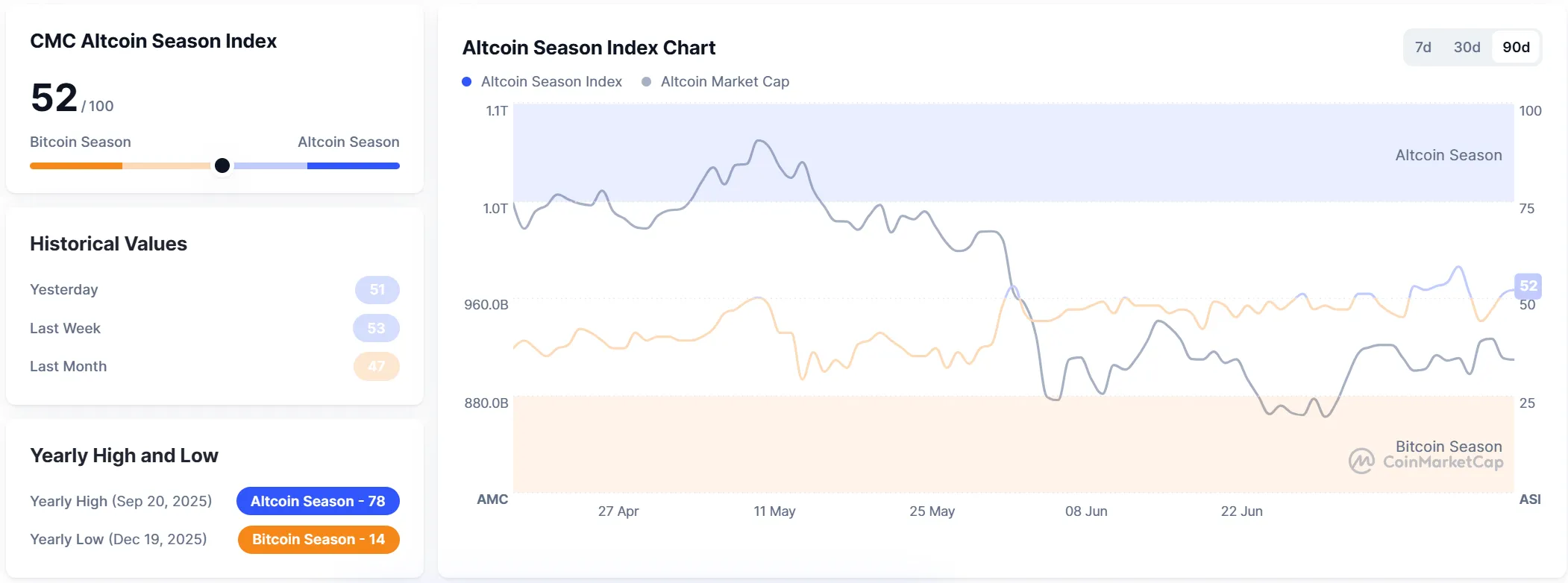
CoinMarketCap’s Altcoin Season Index rose three points from yesterday to 52.
The index compares the price performance of Bitcoin with that of the top 100 cryptocurrencies by market capitalization, excluding stablecoins and wrapped coins. An altcoin season is identified when 75% of those top 100 coins outperform Bitcoin over the past 90 days, while the opposite is considered a Bitcoin season. A reading closer to 100 indicates a stronger altcoin season.