Live Feed
New
Today, July 17, 2026
15:45
Trezor CCO Danny Sanders pushed back on on-chain analyst ZachXBT’s claim that hardware wallets are useless, Cointelegraph reported. In an interview, Sanders said a dedicated iPhone setup may suit experienced users, but an iPhone has a broader attack surface. Because of that, Sanders emphasized hardware wallets offer a stronger form of self-custody for general users.
15:29
A wallet believed to be linked to Lombard Finance transferred 750 BTC worth about $47.8 million to Galaxy Digital, in what was described as likely being related to an OTC trade.
15:23
HSBC has become the first company to receive approval from the Bank of England to launch a digital asset platform within the digital securities sandbox, Cointelegraph reported. The approval allows HSBC to support the issuance and settlement of tokenized bonds.
15:18
U.S. Sen. Cynthia Lummis, who is seen as crypto-friendly, said the CLARITY Act would provide regulatory certainty for developers, protections for investors and stability for the cryptocurrency market, Cointelegraph reported.
15:01
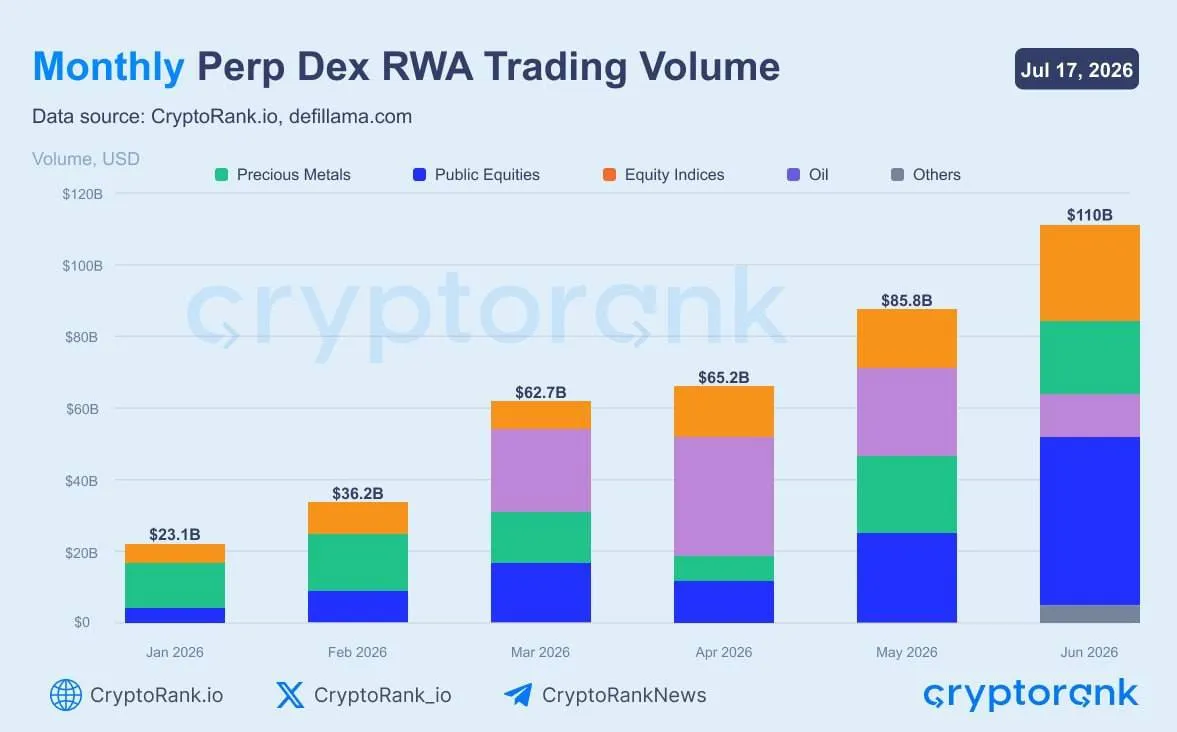
RWA perpetual trading volume reached a record $110 billion in June, up 28% from the previous month, Cointelegraph reported, citing CryptoRank data. Stock tokens were described as the fastest-growing segment in DeFi and as driving the surge.
14:11
An early Lido investor, or possibly an institution, transferred 4.3 million LDO worth $1.61 million to Kraken about one hour ago after holding the tokens for five and a half years, EmberCN reported. The address received an investment allocation of 5 million LDO in December 2020. Those tokens were once worth $30 million at the 2021 peak, but are now worth just $1.88 million. Still, the estimated purchase price was $0.0085 per token, suggesting a gain of more than 40x even at the current price.
13:48
Ether.fi, an on-chain digital asset management platform, announced the launch of a slashing coverage program with decentralized insurance protocol Nexus Mutual that provides up to 15,000 ETH in protection for validator losses from slashing, according to Decrypt.
The company described it as the crypto industry’s largest ETH slashing insurance program. Ether.fi said it has continued to strengthen infrastructure, risk management, and operational security as institutional and retail users have grown rapidly, and added that it has established protections against extreme slashing risks as one of Ethereum’s largest validator operators.
Ether.fi CEO Mike Silagadze said the company has continued investing in security and staking infrastructure based on its belief that the safest protocol will ultimately win. Nexus Mutual founder Hugh Karp called the slashing cover of up to 15,000 ETH a historic milestone.
13:44
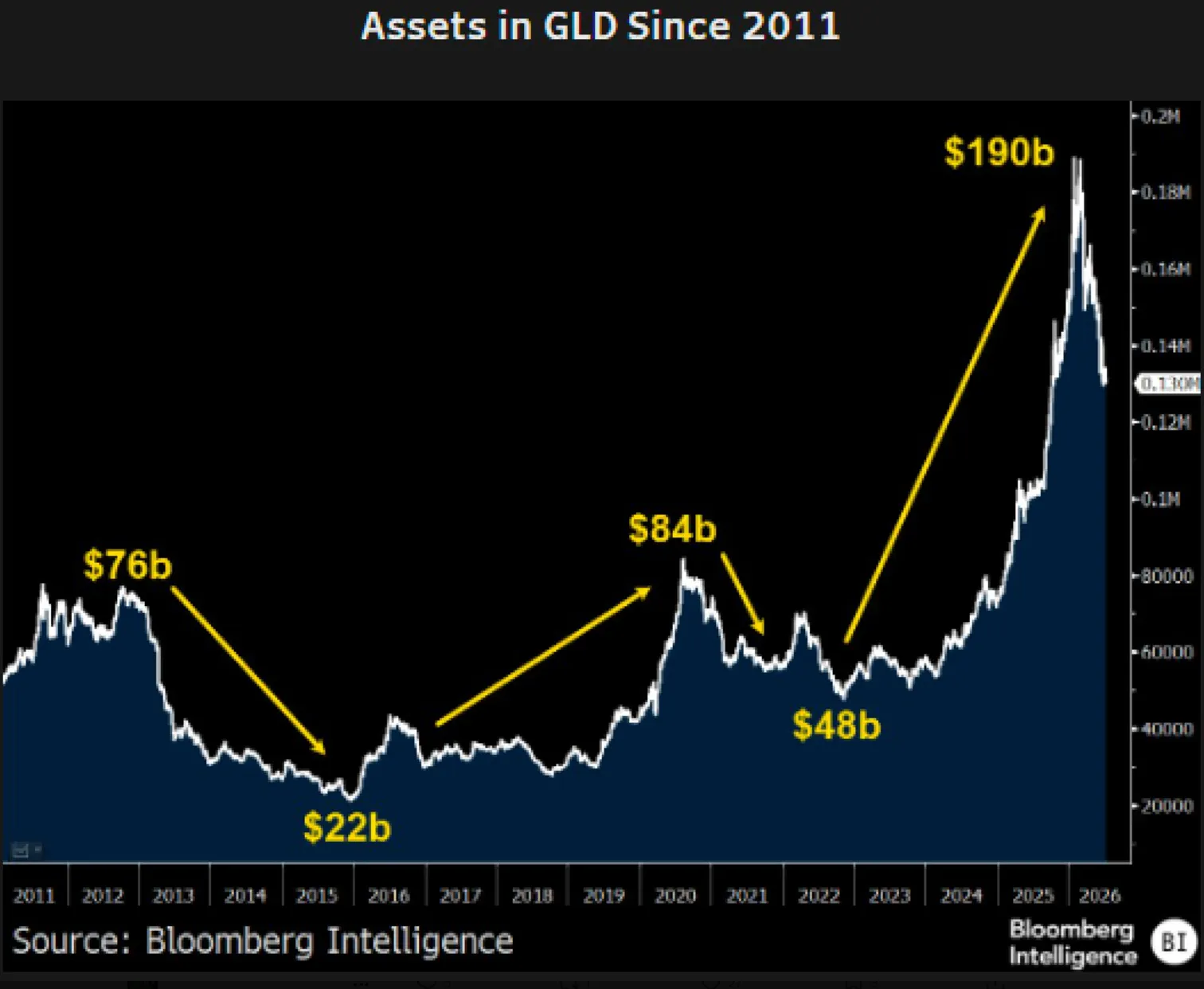
Bloomberg ETF analyst Eric Balchunas said the trajectory of gold ETFs over the past 22 years may be the closest comparable case for gauging how spot Bitcoin ETFs could evolve. He explained that both gold and Bitcoin are stores of value that do not generate cash flow, meaning investor sentiment drives prices more than corporate earnings or interest rates, unlike stocks or bonds.
Balchunas added that SPDR Gold Shares (GLD), a spot gold ETF, once became the world’s largest ETF before going through about eight years of weakness and later recovering. He said spot Bitcoin ETFs may likewise go through repeated sharp rallies and steep pullbacks that test investors’ patience, while noting that gold ETFs have gone on to surpass previous highs over successive cycles, suggesting spot Bitcoin ETFs could follow a similar long-term pattern.
13:42
Former U.S. Rep. Patrick McHenry, a Republican, said the CLARITY Act, a virtual asset market structure bill, could carry historical significance comparable to the Telecommunications Act of 1996, according to an opinion piece published by U.S. venture capital firm a16z.
McHenry said the United States is at a crossroads over whether it will retain its position as a global technology and financial hub or cede leadership to rival countries. He said the CLARITY Act aims to establish a framework that supports innovation in new technologies alongside consumer protection and has bipartisan backing.
He argued U.S. financial regulation after the 2008 financial crisis focused on responding to past crises while showing less urgency in building systems for future technological innovation. In that context, McHenry said the CLARITY Act could become the first major financial reform in about 30 years aimed at building the financial system of the future.
McHenry added the industry is not rejecting regulation but wants clear rules. If passed, the bill would provide regulatory clarity for the digital asset industry while strengthening investor protection and the ability to combat crime, he said. He also said the CLARITY Act is needed to help preserve U.S. technological competitiveness, as capital and innovation move to countries with clear regulations.
13:39
Galaxy Digital (Nasdaq: GLXY), a crypto financial services firm focused on institutions, announced a 15-year official partnership with Texas Tech University in the data center and digital asset sectors. Under the agreement, the home stadium of Texas Tech’s Red Raiders football team will be renamed Galaxy Stadium.
Galaxy said Texas Tech is a key partner in West Texas and an important source of talent, adding that Texas Tech graduates are already working at Helios, its data center. The two sides said they plan to use the partnership as a starting point to jointly review academic and commercial AI projects and pursue strategic cooperation on research, talent development, and expanded investment in the West Texas economy to support digital innovation.
13:33
The three major U.S. stock indices opened lower today.
- S&P 500: -1.17%
- Nasdaq: -1.72%
- Dow Jones: -1.01%
13:32
ARK Invest said in a quarterly report that although Bitcoin fell about 14% in the second quarter, on-chain indicators showed signs that selling pressure was being exhausted. The firm said the amount of BTC held at a loss had surpassed the amount held at a profit, adding this pattern has mainly appeared near the bottom of past market cycles.
ARK Invest said coins sold during the price correction were absorbed by long-term holders, with long-term holder, or LTH, BTC holdings rising to a record of about 14.85 million BTC. At the same time, the firm assessed corporate Bitcoin treasury strategies and the ETF market as weak. It said outflows from U.S. spot BTC ETFs have continued, slowing institutional buying, while continued accumulation by long-term holders suggests a redistribution of supply is underway in the market.
12:41
A district court in Rotterdam has declared crypto trading platform Knaken Cryptohandel BV and an affiliated foundation bankrupt, saying insolvency proceedings are needed to liquidate the company’s assets in an orderly manner after Knaken halted platform operations and restricted user access to accounts.
The court added that the company’s current assets are unlikely to be enough to fully repay customer funds, while users also lack sufficient information to assess their legal rights. Knaken, a Dutch crypto trading platform founded in 2017, halted operations in June.
12:36
European Central Bank Executive Board member Piero Cipollone warned that the spread of stablecoins could weaken commercial banks’ retail deposit base and alter competition in the traditional banking system. As digital payments expand, banks are already facing lower payment-fee income and greater exposure of transaction data, and Cipollone said broader use of stablecoins and other digital-asset payment tools could further increase pressure from deposit outflows. Cipollone also added that Europe’s payment infrastructure is becoming more dependent on non-European companies.
Cipollone stressed that a digital euro would help preserve the role of public money and support banks in maintaining a central role in the payments ecosystem. The ECB recently selected 36 institutions, including banks, fintech firms and payment companies, to participate in its digital euro pilot program, which is scheduled to begin in the second half of 2027. The ECB has previously said it could officially introduce the digital euro in 2029 if related legislation and testing proceed smoothly.
12:07
According to on-chain data, Abraxas Capital has accumulated an additional 12,477 ETH, worth approximately $22.88 million, over the past three hours. Over the past week, the firm has withdrawn a total of 45,996 ETH, valued at around $84.39 million, from Binance, Bybit, and Bitfinex.
11:59
A filing with the UK's Companies House suggests that Nvidia's venture capital arm, NVentures, has invested approximately $196 million in the crypto-friendly neobank Revolut, TechFundingNews reported. The document indicates that a shareholder, presumed to be NVentures LLC, holds about 141,834 shares in Revolut. Based on the issue price from that funding round, the stake is valued at around $195.9 million. Neither Nvidia nor Revolut has officially disclosed the size of the investment or the corresponding equity stake. Revolut is a UK-based fintech company that provides services including payments, foreign exchange, investments, and virtual assets. Market observers interpret the move as part of Nvidia's broader strategy to expand its investments in the AI and digital finance ecosystems.
11:20
Solana-based DeFi protocol DeFiTuna lost 569,601 USDC in an exploit on July 16, according to an analysis by blockchain security firm CertiK. The attacker initiated the exploit by creating a TUNA/USDC pool with extremely low liquidity. They then swapped borrowed USDC through Jupiter routing within this pool, receiving a negligible amount of TUNA in return. This action triggered a rounding error in the protocol's asset valuation process, causing the total asset value to be calculated as zero and thereby bypassing its solvency checks. The attacker subsequently withdrew the USDC through a liquidity position under their control, and the stolen funds have since been distributed to multiple intermediate addresses. CertiK identified the root cause as a flaw in the solvency check logic, which incorrectly validated a position as normal even when its asset value was calculated as zero under extreme conditions.
10:42
The European Securities and Markets Authority (ESMA) has added 14 new Crypto-Asset Service Providers (CASPs) to its Markets in Crypto-Assets (MiCA) registry, bringing the total to 294, Cointelegraph reported. The new additions include Ripple's European payments subsidiary, Ripple Payments Europe, as well as Portugal's Bison Bank, Croatia's state-owned Hrvatska poštanska banka (HPB), and several German cooperative banks. ESMA stated this shows the continued entry of traditional financial institutions into the MiCA market.
Meanwhile, the number of registered E-Money Token (EMT) issuers stands at 21, with no Asset-Referenced Token (ART) issuers yet approved. ESMA also added two non-compliant firms to a separate list following action by Italy's financial authority (CONSOB), increasing the total on that list to 164.
10:36
Coinbase CEO Brian Armstrong has argued that the tokenization of stocks will break Wall Street's monopolistic structure. He stated that billions of people are unable to access the U.S. stock market due to geographical regulations and complex financial systems, emphasizing that tokenization is the solution. Acting on this vision, Coinbase launched a tokenized stock trading service last month for non-U.S. users, backed on a one-to-one basis by physical shares. The service allows users to trade fractional shares of U.S. stocks like Apple and Nvidia and receive dividends using only a smartphone. Armstrong noted that traditional financial institutions are also accelerating their tokenization efforts, citing tests by the DTCC, JPMorgan, and BlackRock to move ETFs onto the blockchain. He predicted that stock tokenization will become central to the competition for retail investors, shaking the monopoly held by existing brokerage firms.
10:30
SBI Holdings has completed its acquisition of a majority stake in Singaporean virtual asset platform Coinhako, making it a subsidiary. The company announced that the transaction was finalized on July 16 after receiving approval from the Monetary Authority of Singapore (MAS). Coinhako provides regulated digital asset services through Hako Technology, which holds a Major Payment Institution (MPI) license. SBI stated that the acquisition will provide it with Coinhako's customer base, operational expertise, and regional network. The company plans to build a digital asset ecosystem connecting Japan and Southeast Asia, expanding its business into cryptocurrency trading, a Japanese yen stablecoin (JPYSC), security tokens, on-chain finance, and cross-border payments.
09:40
The U.S. Department of Justice (DOJ) has indicted South Dakota investor Benjamin Paul Wiener on 29 counts related to an alleged $20 million cryptocurrency investment fraud, Cointelegraph reported. The charges include wire fraud, money laundering, bank fraud, and aggravated identity theft. Prosecutors allege that Wiener, through his company, solicited cash and crypto from investors by promising false returns. He is accused of operating a Ponzi scheme, using new investor funds to pay earlier ones, spending the money for personal use, and laundering some of it through cryptocurrency exchanges. The scheme reportedly victimized dozens of people in South Dakota and Minnesota. If convicted, Wiener faces up to 30 years in prison for bank fraud and up to 20 years for both wire fraud and money laundering.
09:27
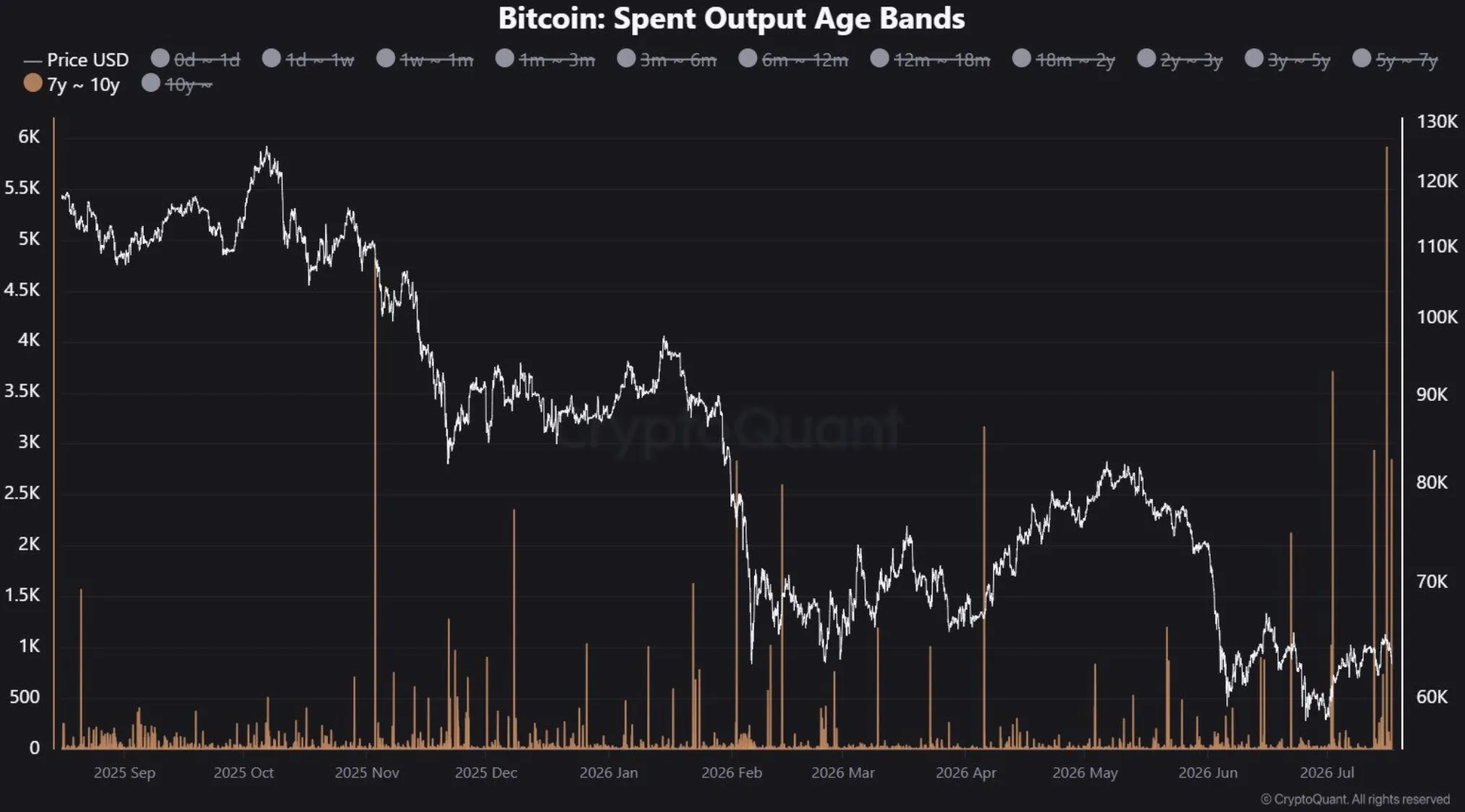
According to Cointelegraph, a total of 144,470 BTC has been moved over the past year from Bitcoin wallets that had been dormant for more than seven years. Such large-scale transfers from long-inactive wallets are often interpreted as movements by early investors or long-term holders, though it has not been confirmed whether these transfers resulted in actual sales.
09:14
An Argentine federal judge, Marcelo Martínez de Giorgi, has frozen 25 cryptocurrency accounts related to the Libra (LIBRA) memecoin case. The judge also ordered Binance, Bybit, OKX, CoinEx, FixedFloat, and Bitfinex to submit account holders' KYC data, IP records, associated bank accounts, and complete transaction histories.
Federal police stated they had identified funds originating from the "Team Libra Wallet" that moved through multiple blockchains and centralized exchanges. They noted that some transactions were structured to make the funds difficult to trace. The investigation is connected to an incident in which Argentine President Javier Milei promoted the LIBRA token on X in February 2025.
09:10
Bitcoin is having difficulty reclaiming the $70,000 level despite a recent rebound, facing simultaneous selling from both long-term (LTH) and short-term holders (STH), according to an analysis by CryptoSlate. A key resistance zone is seen between $70,000 and $80,000, where approximately $4.5 billion in call option open interest is concentrated.
Data from Glassnode shows that long-term holders realizing losses have accounted for over 65% of recent exchange inflows. At the same time, short-term holders who bought near the June lows are taking profits, which is limiting upward pressure.
However, there are also signs of recovering demand. U.S. spot BTC ETFs have recorded net inflows for three consecutive days, and CryptoQuant's Bitcoin Regime Score remains in positive territory. The analysis concluded that for Bitcoin to break through $70,000, sustained buying from spot markets and ETFs will be needed to absorb the sell-offs from current holders.
08:50
Xie Zaiyin, head of Greater China for global crypto exchange Bitget, announced on X (formerly Twitter) that the platform's real-world asset (RWA) tokenization product, rToken, has recorded a cumulative trading volume of $2.17 billion six weeks after its launch. The average daily trading volume over the past week was approximately $80 million, with current total assets under management (AUM) at $103 million.
